AlphaGo Zero is a version of DeepMind's Go software AlphaGo. AlphaGo's team published an article in Nature in October 2017 introducing AlphaGo Zero, a version created without using data from human games, and stronger than any previous version. By playing games against itself, AlphaGo Zero: surpassed the strength of AlphaGo Lee in three days by winning 100 games to 0; reached the level of AlphaGo Master in 21 days; and exceeded all previous versions in 40 days. Training artificial intelligence (AI) without datasets derived from human experts has significant implications for the development of AI with superhuman skills, as expert data is "often expensive, unreliable, or simply unavailable." Demis Hassabis, the co-founder and CEO of DeepMind, said that AlphaGo Zero was so powerful because it was "no longer constrained by the limits of human knowledge". Furthermore, AlphaGo Zero performed better than standard deep reinforcement learning models (such as Deep Q-Network implementations) due to its integration of Monte Carlo tree search. David Silver, one of the first authors of DeepMind's papers published in Nature on AlphaGo, said that it is possible to have generalized AI algorithms by removing the need to learn from humans. Google later developed AlphaZero, a generalized version of AlphaGo Zero that could play chess and shōgi in addition to Go. In December 2017, AlphaZero beat the 3-day version of AlphaGo Zero by winning 60 games to 40, and with 8 hours of training it outperformed AlphaGo Lee on an Elo scale. AlphaZero also defeated a top chess program (Stockfish) and a top Shōgi program (Elmo). == Architecture == The network in AlphaGo Zero is a ResNet with two heads. The stem of the network takes as input a 17x19x19 tensor representation of the Go board. 8 channels are the positions of the current player's stones from the last eight time steps. (1 if there is a stone, 0 otherwise. If the time step go before the beginning of the game, then 0 in all positions.) 8 channels are the positions of the other player's stones from the last eight time steps. 1 channel is all 1 if black is to move, and 0 otherwise. The body is a ResNet with either 20 or 40 residual blocks and 256 channels. There are two heads, a policy head and a value head. Policy head outputs a logit array of size 19 × 19 + 1 {\displaystyle 19\times 19+1} , representing the logit of making a move in one of the points, plus the logit of passing. Value head outputs a number in the range ( − 1 , + 1 ) {\displaystyle (-1,+1)} , representing the expected score for the current player. -1 represents current player losing, and +1 winning. == Training == AlphaGo Zero's neural network was trained using TensorFlow, with 64 GPU workers and 19 CPU parameter servers. Only four TPUs were used for inference. The neural network initially knew nothing about Go beyond the rules. Unlike earlier versions of AlphaGo, Zero only perceived the board's stones, rather than having some rare human-programmed edge cases to help recognize unusual Go board positions. The AI engaged in reinforcement learning, playing against itself until it could anticipate its own moves and how those moves would affect the game's outcome. In the first three days AlphaGo Zero played 4.9 million games against itself in quick succession. It appeared to develop the skills required to beat top humans within just a few days, whereas the earlier AlphaGo took months of training to achieve the same level. According to Epoch.ai, training cost 3e23 FLOPs. For comparison, the researchers also trained a version of AlphaGo Zero using human games, AlphaGo Master, and found that it learned more quickly, but actually performed more poorly in the long run. DeepMind submitted its initial findings in a paper to Nature in April 2017, which was then published in October 2017. == Hardware cost == The hardware cost for a single AlphaGo Zero system in 2017, including the four TPUs, has been quoted as around $25 million. == Applications == According to Hassabis, AlphaGo's algorithms are likely to be of the most benefit to domains that require an intelligent search through an enormous space of possibilities, such as protein folding (see AlphaFold) or accurately simulating chemical reactions. AlphaGo's techniques are probably less useful in domains that are difficult to simulate, such as learning how to drive a car. DeepMind stated in October 2017 that it had already started active work on attempting to use AlphaGo Zero technology for protein folding, and stated it would soon publish new findings. == Reception == AlphaGo Zero was widely regarded as a significant advance, even when compared with its groundbreaking predecessor, AlphaGo. Oren Etzioni of the Allen Institute for Artificial Intelligence called AlphaGo Zero "a very impressive technical result" in "both their ability to do it—and their ability to train the system in 40 days, on four TPUs". The Guardian called it a "major breakthrough for artificial intelligence", citing Eleni Vasilaki of Sheffield University and Tom Mitchell of Carnegie Mellon University, who called it an impressive feat and an “outstanding engineering accomplishment" respectively. Mark Pesce of the University of Sydney called AlphaGo Zero "a big technological advance" taking us into "undiscovered territory". Gary Marcus, a psychologist at New York University, has cautioned that for all we know, AlphaGo may contain "implicit knowledge that the programmers have about how to construct machines to play problems like Go" and will need to be tested in other domains before being sure that its base architecture is effective at much more than playing Go. In contrast, DeepMind is "confident that this approach is generalisable to a large number of domains". In response to the reports, South Korean Go professional Lee Sedol said, "The previous version of AlphaGo wasn’t perfect, and I believe that’s why AlphaGo Zero was made." On the potential for AlphaGo's development, Lee said he will have to wait and see but also said it will affect young Go players. Mok Jin-seok, who directs the South Korean national Go team, said the Go world has already been imitating the playing styles of previous versions of AlphaGo and creating new ideas from them, and he is hopeful that new ideas will come out from AlphaGo Zero. Mok also added that general trends in the Go world are now being influenced by AlphaGo's playing style. "At first, it was hard to understand and I almost felt like I was playing against an alien. However, having had a great amount of experience, I’ve become used to it," Mok said. "We are now past the point where we debate the gap between the capability of AlphaGo and humans. It’s now between computers." Mok has reportedly already begun analyzing the playing style of AlphaGo Zero along with players from the national team. "Though having watched only a few matches, we received the impression that AlphaGo Zero plays more like a human than its predecessors," Mok said. Chinese Go professional Ke Jie commented on the remarkable accomplishments of the new program: "A pure self-learning AlphaGo is the strongest. Humans seem redundant in front of its self-improvement." == Comparison with predecessors == == AlphaZero == On 5 December 2017, DeepMind team released a preprint on arXiv, introducing AlphaZero, a program using generalized AlphaGo Zero's approach, which achieved within 24 hours a superhuman level of play in chess, shogi, and Go, defeating world-champion programs, Stockfish, Elmo, and 3-day version of AlphaGo Zero in each case. AlphaZero (AZ) is a more generalized variant of the AlphaGo Zero (AGZ) algorithm, and is able to play shogi and chess as well as Go. Differences between AZ and AGZ include: AZ has hard-coded rules for setting search hyperparameters. The neural network is now updated continually. Chess (unlike Go) can end in a tie; therefore AZ can take into account the possibility of a tie game. An open source program, Leela Zero, based on the ideas from the AlphaGo papers is available. It uses a GPU instead of the TPUs recent versions of AlphaGo rely on.
BevQ
BevQ is a queue management mobile application developed by Faircode Technologies of Kochi, Kerala. It is provided by the Kerala State Beverages Corporation under Government of Kerala. == History == This app was released together by the Government of Kerala and the Kerala State Beverages Corporation in order to implement social distancing in the liquor stores Kerala in the case of the COVID-19 pandemic in Kerala and to reduce the congestion of people. The BevQ App was released by Faircode Technologies on 27 May 2020 on the Google Play Store. In January 2021, the app was withdrawn as bars had opened. In June 2021, there was a commitment from the Kerala CM that the App will be relaunched again. It has been reported that over 132,000 new users downloaded the app in the 48 hours after the announcement. == Achievements == The BEVQ app, which works only in the state of Kerala, beat all other Indian food and drink apps in 2020 to see the highest growth in year-on-year sessions, according to the State of Mobile 2021 report by App Annie. The app even beat the likes of Domino’s, which is used all across India. Around 300 government Liquor shops and 900 private liquor shops were enlisted in the platform. More than 200 million unique users registered in the platform. About 250,000 tokens were given out a day.
Game Jolt
Game Jolt is a social community platform for video games, gamers and content creators. Founded by Yaprak and David DeCarmine, it is available on iOS, Android, and on the web and as a desktop app for Windows and Linux. Users share interactive content through a variety of formats including images, videos, live streams, chat rooms, and virtual events. == Features == === Crowd streaming === In 2021 Game Jolt revealed their own live streaming feature called Firesides. Firesides allowed multiple users to simultaneously livestream together with nearly no delay. The feature launched with a virtual concert showcasing its ability to accommodate multiple streamers. On October 16, 2023, Firesides were removed from Game Jolt. === Mobile app === Game Jolt Social by Game Jolt Inc. launched on both the Apple App Store and Google Play Store in March 2022. "It's clear to us that Gen Z is tired of generic social media and they want a place specifically for gaming that supports all types of content they're creating–art, videos, thoughts, and livestreams all in one place." said Game Jolt founder and CEO Yaprak DeCarmine, in a statement to VentureBeat. === Game API === The Game Jolt Application Programming Interface (usually known as the Game Jolt Game API) allows any developer using a game development platform that supports HTTP operations and MD5 or SHA-1. Game Jolt advertises that the API can: Create multiple "scoreboards" which collect high scores from players made publicly available on the game's profile and give user accounts EXP Award player's trophies which give user accounts EXP Store game data on Game Jolt's data servers Log whether a user is currently playing a game they're logged into via the GJAPI == Game jams and competitions == Game Jolt regularly hosts game jams where participants are encouraged to develop games for a chance to win prizes. They hosted their first game jam in 2009, Shocking Contest. In November 2014, Game Jolt announced the "Indies vs PewDiePie" game jam, partnering with the popular YouTuber Felix "PewDiePie" Kjellberg. Developers were given a weekend (21–24 November) to create a game with the theme of "fun to play, fun to watch" to suit the Let's Plays entertainment style. Users could rate entries afterwards until December 1 when the scores were counted up. The prize to the top 10 rated games was Felix playing the games on his channel as a means of promotion for the developers, although later he played other entries. One of the participants of the jam, now known as Outerminds Inc. was discovered and hired by PewDiePie to develop his mobile game, Legend of the Brofist. Game Jolt partnered with Felix, Sean "Jacksepticeye" McLoughlin and Mark "Markiplier" Fischbach to host "Indies vs Gamers" in July 2015. The requirements for entries were arcade games using the Game Jolt Game API highscore tables, to be made between the July 17–20 and the top 5 games were played on the partner's YouTube channels. Following the "Indies vs PewDiePie" game jam in 2014, Game Jolt released their internal jam hosting tools public for all users to use as a service, to create their own game jams that integrated with the main site. Today, Game Jolt focuses on hosting and co-hosting game competitions with established brands in order to bring monetary and educational opportunities to their users. On April 15, 2024, an announcement was made about a collaboration with Pocket Worlds for the "HighRise Game Jam". Pocket Worlds had sold NFTs up until roughly 2022, causing a community outburst. The situation was addressed, and the situation started to disperse. == Contests == == Events == Game Jolt hosts both physical and virtual events to entertain and prank its users, which consists of the following: == History == Game Jolt has supported independent creators with a central platform to manage their content and communities since its start in 2003. David DeCarmine began development of Game Jolt at the age of 14 for a group of hobbyists, making games and sharing on forums in an early iteration known as Holo World. The original intention was to create a platform for gamers where new games could be discoverable and quickly playable, and where feedback could be provided directly to the creators, allowing them to continue improving their games. In 2008, Game Jolt was registered as an LLC, then incorporated as Game Jolt Inc. in September 2020. A new site launched in 2015 featuring a responsive design, automated curation for both games and game news articles which weighs how recent a game was uploaded and how popular it is ("hot") and filtering options on game listings for platform, maturity rating and development status. In March 2022, Game Jolt launched a mobile application simultaneously on the Google Play Store and Apple App Store targeted at Gen Z gamers and creators. While in beta, the mobile app had 100,000 installs pre-launch. === Game store === Game Jolt continues to host a large library of independent games. Game developers can upload their games directly to the site to share or sell. They would allow distribution for downloadable games, later adding support for Adobe Flash, Unity and Java games which allowed support for browser based games. In February 2013, Game Jolt built support for browser-based HTML5 games as well. A user levelling system was released into public beta in April 2013, incorporating the GJAPI trophies and highscores, as well as site activity, to generate 'EXP' (experience points). Game Jolt Jams released in early 2014 as a service to allow users to create their own game jams that integrated with the main site. In April 2016, an online marketplace was announced and released the following month with an exclusive set of game titles, including Bendy and the Ink Machine, allowing developers to sell their games on the site. In January 2016, Game Jolt released source code of the client and site's front end on GitHub under MIT license. In January 2022, Game Jolt banned adult games from appearing on the site, stating in an email to developers that the site had become a "social media platform" and they "had to make decisions around the direction and future of the brand which has now included the removal of hosted games with explicitly adult content." In response to a tweet by Itch.io saying the site is not for prudes, they wrote in their own tweet: "Game Jolt is a platform with a large audience of 13-16 year olds. Our users asked us to clean up, so here we are." == Investments == After bootstrapping Game Jolt with revenue earned from ads on the website for years, the DeCarmines secured venture capital in 2020 from SoftBank, doing so again in 2021 from founders of Twitch, Rec Room, Modio and more.
Network Abstraction Layer
The Network Abstraction Layer (NAL) is a part of the H.264/AVC and HEVC video coding standards. The main goal of the NAL is the provision of a "network-friendly" video representation addressing "conversational" (video telephony) and "non conversational" (storage, broadcast, or streaming) applications. NAL has achieved a significant improvement in application flexibility relative to prior video coding standards. == Introduction == An increasing number of services and growing popularity of high definition TV are creating greater needs for higher coding efficiency. Moreover, other transmission media such as cable modem, xDSL, or UMTS offer much lower data rates than broadcast channels, and enhanced coding efficiency can enable the transmission of more video channels or higher quality video representations within existing digital transmission capacities. Video coding for telecommunication applications has diversified from ISDN and T1/E1 service to embrace PSTN, mobile wireless networks, and LAN/Internet network delivery. Throughout this evolution, continued efforts have been made to maximize coding efficiency while dealing with the diversification of network types and their characteristic formatting and loss/error robustness requirements. The H.264/AVC and HEVC standards are designed for technical solutions including areas like broadcasting (over cable, satellite, cable modem, DSL, terrestrial, etc.) interactive or serial storage on optical and magnetic devices, conversational services, video-on-demand or multimedia streaming, multimedia messaging services, etc. Moreover, new applications may be deployed over existing and future networks. This raises the question about how to handle this variety of applications and networks. To address this need for flexibility and customizability, the design covers a NAL that formats the Video Coding Layer (VCL) representation of the video and provides header information in a manner appropriate for conveyance by a variety of transport layers or storage media. The NAL is designed in order to provide "network friendliness" to enable simple and effective customization of the use of VCL for a broad variety of systems. The NAL facilitates the ability to map VCL data to transport layers such as: RTP/IP for any kind of real-time wire-line and wireless Internet services. File formats, e.g., ISO MP4 for storage and MMS. H.32X for wireline and wireless conversational services. MPEG-2 systems for broadcasting services, etc. The full degree of customization of the video content to fit the needs of each particular application is outside the scope of the video coding standardization effort, but the design of the NAL anticipates a variety of such mappings. Some key concepts of the NAL are NAL units, byte stream, and packet formats uses of NAL units, parameter sets, and access units. A short description of these concepts is given below. == NAL units == The coded video data is organized into NAL units, each of which is effectively a packet that contains an integer number of bytes. The first byte of each H.264/AVC NAL unit is a header byte that contains an indication of the type of data in the NAL unit. For HEVC the header was extended to two bytes. All the remaining bytes contain payload data of the type indicated by the header. The NAL unit structure definition specifies a generic format for use in both packet-oriented and bitstream-oriented transport systems, and a series of NAL units generated by an encoder is referred to as a NAL unit stream. == NAL Units in Byte-Stream Format Use == Some systems require delivery of the entire or partial NAL unit stream as an ordered stream of bytes or bits within which the locations of NAL unit boundaries need to be identifiable from patterns within the coded data itself. For use in such systems, the H.264/AVC and HEVC specifications define a byte stream format. In the byte stream format, each NAL unit is prefixed by a specific pattern of three bytes called a start code prefix. The boundaries of the NAL unit can then be identified by searching the coded data for the unique start code prefix pattern. The use of emulation prevention bytes guarantees that start code prefixes are unique identifiers of the start of a new NAL unit. A small amount of additional data (one byte per video picture) is also added to allow decoders that operate in systems that provide streams of bits without alignment to byte boundaries to recover the necessary alignment from the data in the stream. Additional data can also be inserted in the byte stream format that allows expansion of the amount of data to be sent and can aid in achieving more rapid byte alignment recovery, if desired. == NAL Units in Packet-Transport System Use == In other systems (e.g., IP/RTP systems), the coded data is carried in packets that are framed by the system transport protocol, and identification of the boundaries of NAL units within the packets can be established without use of start code prefix patterns. In such systems, the inclusion of start code prefixes in the data would be a waste of data carrying capacity, so instead the NAL units can be carried in data packets without start code prefixes. == VCL and Non-VCL NAL Units == NAL units are classified into VCL and non-VCL NAL units. VCL NAL units contain the data that represents the values of the samples in the video pictures. Non-VCL NAL units contain any associated additional information such as parameter sets (important header data that can apply to a large number of VCL NAL units) and supplemental enhancement information (timing information and other supplemental data that may enhance usability of the decoded video signal but are not necessary for decoding the values of the samples in the video pictures). == Parameter Sets == A parameter set contains shared configuration data that is carried in non-VCL NAL units. Parameter sets are typically reused when decoding many coded pictures within a video sequence. Each VCL NAL unit references a picture parameter set (PPS), which in turn references a sequence parameter set (SPS). There are two types of parameter sets: Sequence parameter set (SPS), which specifies mostly constant configuration such as resolution, bit depth, or chroma format. (For a concrete implementation, see FFmpeg's SPS struct.) Picture parameter set (PPS), which applies on top of an SPS, and specifies configuration such as QP offsets. (For a concrete implementation, see FFmpeg's PPS struct.) The sequence and picture parameter-set mechanism decouples the transmission of infrequently changing information from the transmission of coded representations of the values of the samples in the video pictures. Each VCL NAL unit contains an identifier that refers to the content of the relevant picture parameter set and each picture parameter set contains an identifier that refers to the content of the relevant sequence parameter set. In this manner, a small amount of data (the identifier) can be used to refer to a larger amount of information (the parameter set) without repeating that information within each VCL NAL unit. Sequence and picture parameter sets can be sent well ahead of the VCL NAL units that they apply to, and can be repeated to provide robustness against data loss. In some applications, parameter sets may be sent within the channel that carries the VCL NAL units (termed "in-band" transmission). In other applications, it can be advantageous to convey the parameter sets "out-of-band" using a more reliable transport mechanism than the video channel itself. == Access Units == A set of NAL units in a specified form is referred to as an access unit. The decoding of each access unit results in one decoded picture. Each access unit contains a set of VCL NAL units that together compose a primary coded picture. It may also be prefixed with an access unit delimiter to aid in locating the start of the access unit. Some supplemental enhancement information containing data such as picture timing information may also precede the primary coded picture. The primary coded picture consists of a set of VCL NAL units consisting of slices or slice data partitions that represent the samples of the video picture. Following the primary coded picture may be some additional VCL NAL units that contain redundant representations of areas of the same video picture. These are referred to as redundant coded pictures, and are available for use by a decoder in recovering from loss or corruption of the data in the primary coded pictures. Decoders are not required to decode redundant coded pictures if they are present. Finally, if the coded picture is the last picture of a coded video sequence (a sequence of pictures that is independently decodable and uses only one sequence parameter set), an end of sequence NAL unit may be present to indicate the end of the sequence; and if the coded picture is the last coded picture in the entire NAL unit stream, an end of stream NAL unit may be present to
Bin picking
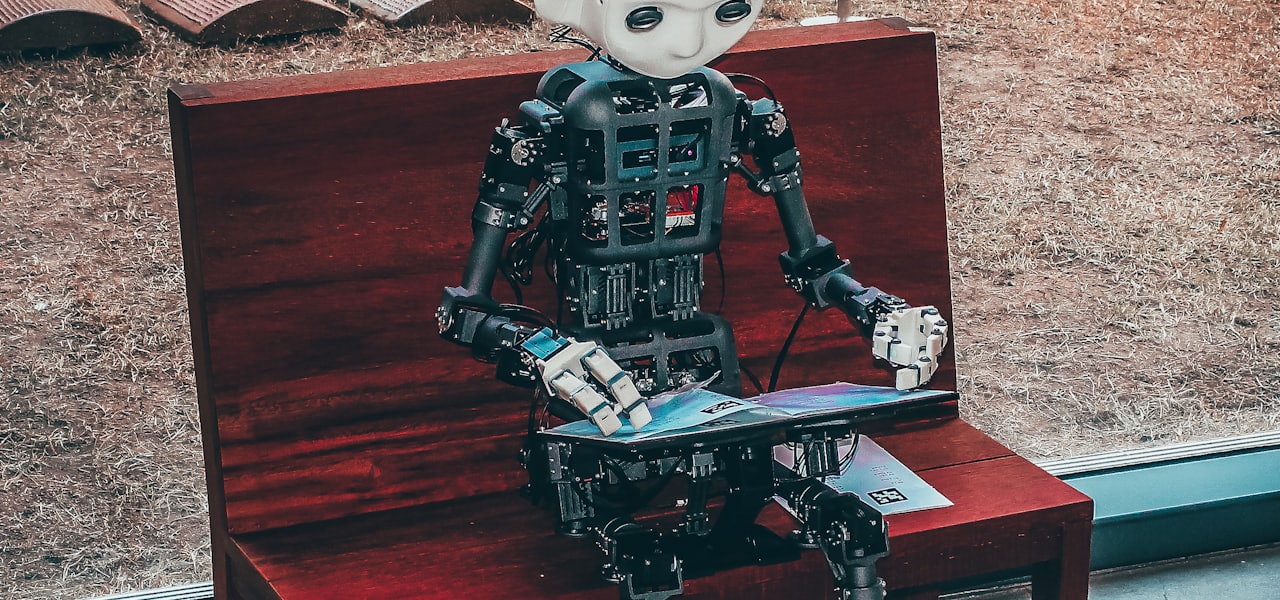
Bin picking (also referred to as random bin picking) is a core problem in computer vision and robotics. The goal is to have a robot with sensors and cameras attached to it pick-up known objects with random poses out of a bin using a suction gripper, parallel gripper, or other kind of robot end effector. Early work on bin picking made use of Photometric Stereo in recovering the shapes of objects and to determine their orientation in space. Amazon previously held a competition focused on bin picking referred to as the "Amazon Picking Challenge", which was held from 2015 to 2017. The challenge tasked entrants with building their own robot hardware and software that could attempt simplified versions of the general task of picking and stowing items on shelves. The robots were scored by how many items were picked and stowed in a fixed amount of time. The first Amazon Robotics challenge was won by a team from TU Berlin in 2015, followed by a team from TU Delft and the Dutch company "Fizyr" in 2016. The last Amazon Robotics Challenge was won by the Australian Centre for Robotic Vision at Queensland University of Technology with their robot named Cartman. The Amazon Robotics/Picking Challenge was discontinued following the 2017 competition. Although there can be some overlap, bin picking is distinct from "each picking" and the bin packing problem.
Concurrent MetateM
Concurrent MetateM is a multi-agent language in which each agent is programmed using a set of (augmented) temporal logic specifications of the behaviour it should exhibit. These specifications are executed directly to generate the behaviour of the agent. As a result, there is no risk of invalidating the logic as with systems where logical specification must first be translated to a lower-level implementation. The root of the MetateM concept is Gabbay's separation theorem; any arbitrary temporal logic formula can be rewritten in a logically equivalent past → future form. Execution proceeds by a process of continually matching rules against a history, and firing those rules when antecedents are satisfied. Any instantiated future-time consequents become commitments which must subsequently be satisfied, iteratively generating a model for the formula made up of the program rules. == Temporal Connectives == The Temporal Connectives of Concurrent MetateM can divided into two categories, as follows: Strict past time connectives: '●' (weak last), '◎' (strong last), '◆' (was), '■' (heretofore), 'S' (since), and 'Z' (zince, or weak since). Present and future time connectives: '◯' (next), '◇' (sometime), '□' (always), 'U' (until), and 'W' (unless). The connectives {◎,●,◆,■,◯,◇,□} are unary; the remainder are binary. === Strict past time connectives === ==== Weak last ==== ●ρ is satisfied now if ρ was true in the previous time. If ●ρ is interpreted at the beginning of time, it is satisfied despite there being no actual previous time. Hence "weak" last. ==== Strong last ==== ◎ρ is satisfied now if ρ was true in the previous time. If ◎ρ is interpreted at the beginning of time, it is not satisfied because there is no actual previous time. Hence "strong" last. ==== Was ==== ◆ρ is satisfied now if ρ was true in any previous moment in time. ==== Heretofore ==== ■ρ is satisfied now if ρ was true in every previous moment in time. ==== Since ==== ρSψ is satisfied now if ψ is true at any previous moment and ρ is true at every moment after that moment. ==== Zince, or weak since ==== ρZψ is satisfied now if (ψ is true at any previous moment and ρ is true at every moment after that moment) OR ψ has not happened in the past. === Present and future time connectives === ==== Next ==== ◯ρ is satisfied now if ρ is true in the next moment in time. ==== Sometime ==== ◇ρ is satisfied now if ρ is true now or in any future moment in time. ==== Always ==== □ρ is satisfied now if ρ is true now and in every future moment in time. ==== Until ==== ρUψ is satisfied now if ψ is true at any future moment and ρ is true at every moment prior. ==== Unless ==== ρWψ is satisfied now if (ψ is true at any future moment and ρ is true at every moment prior) OR ψ does not happen in the future.
Aphelion (software)
The Aphelion Imaging Software Suite is a software suite that includes three base products - Aphelion Lab, Aphelion Dev, and Aphelion SDK for addressing image processing and image analysis applications. The suite also includes a set of extension programs to implement specific vertical applications that benefit from imaging techniques. The Aphelion software products can be used to prototype and deploy applications, or can be integrated, in whole or in part, into a user's system as processing and visualization libraries whose components are available as both DLLs or .Net components. == History and evolution == The development of Aphelion started in 1995 as a joint project of a French company, ADCIS S.A., and an American company, Amerinex Applied Imaging, Inc. (AAI) Aphelion's image processing and analysis functions were made from operators available from the KBVision software developed and sold by Amerinex's predecessor, Amerinex Artificial Intelligence Inc. In the 1990s, the XLim software library was developed at the Center of Mathematical Morphology of Mines ParisTech, and both companies carried out its development tasks. The first version of Aphelion was completed and released in April 1996. Successive versions were released before the first official stable release in December 1996 at the Photonics East conference in Boston and the Solutions Vision show in Paris in January 1997, where at the latter it competed with Stemmer Imaging's CVB imaging toolbox. In 1998, version 2.3 of Aphelion for Windows 98 was released, and its user base was growing in both France and the United States. Version 3.0, totally rewritten to take advantage of Microsoft's then-recent ActiveX technology, was officially released in 2000. It also became available as a « Developer » version, for rapid prototyping of applications using its intuitive GUI and the macro recording capability, and a « Core » version, including the full library as a set of ActiveX components to be used by software developers, integrators and original equipment manufacturers (OEM). As AAI turned its focus to security, in 2001, ADCIS took the lead on developing Aphelion. AAI focused on millimeter wave scanners for concealed weapon detection at airports, and eventually merged with Millimetrics to become Millivision. In 2004, ADCIS specified version 4.0 of Aphelion. The set of image processing/analysis functions was rewritten one more time to be compatible with the .NET technology and the emergence of 64 bit architecture PCs. In addition, the GUI was redesigned to address two usage types: a semi-automatic use where the user is guided through the different steps of functions, and a fully automatic use where the expert user can quickly invoke imaging functions. Its first release was presented at the IPOT exhibition in Birmingham, UK the same year. During the Vision Show in Paris in October 2008, the new Aphelion Lab product was launched for users that are not specialists in image processing. It is easier to use, and only includes fewer image processing functions. It was then included in the Aphelion Image Processing Suite, consisting of Aphelion Dev (replacing Aphelion Developer), Aphelion Lab, Aphelion SDK (replacing Aphelion Core), and a set of extensions. Nowadays, ADCIS is still working on the suite, and updated versions with new extensions and functionalities continually become available from the websites of both companies. In 2015, support was added for very large images and scan microscope images (virtual slides compound into a very large JPEG 2000 image) for high throughput imaging, and new specific extensions were also added. In late 2015, ADCIS announced Aphelion's port for tablets and smartphones, for vertical applications. The name "Aphelion" comes from the astronomical term of the same name, meaning the point on a planet rotating around the Sun where it lies farthest from it, applying the term in a metaphorical sense. Unix was the operating system used on scientific workstations in the 1990s, such as on the workstations manufactured by market leader Sun Microsystems, which Windows suite Aphelion was quite removed from. == Description == Aphelion is a software suite to be used for image processing and image analysis. It supports 2D and 3D, monochrome, color, and multi-band images. It is developed by ADCIS, a French software house located in Saint-Contest, Calvados, Normandy. Aphelion is widely used in the scientific/industry community to solve basic and complex imaging applications. First, the imaging application is quickly developed from the Graphical User Interface, involving a set of functions that can be automatically recorded into a macro command. The macro languages available in Aphelion (i.e. BasicScript, Python, and C#) help to process batch of images, and prompt the user if needed for specific parameters that are applied to the imaging functions. All Aphelion image processing functions are written in C++, and the Aphelion user interface is written in C#. C++ functions can be called from the C# language thanks the use of dedicated wrappers. The main principle of image processing is to automatically process pixels of a digital image, then extract one or more objects of interest (i.e. cells in the field of biology, inclusions in the field of material science) and compute one or more measurements on those objects to quantify the image and generate a verdict (good image, image with defects, cancerous cells). In other words, starting from an image, pixels are processed by a set of successive functions or operators until only measurements are computed and used as the input of a 3rd party system or a classification software that will classify objects of interest that have been extracted during the imaging process. An acquisition system such as a digital camera, a video camera, an optical or electron microscope, a medical scanner, or a smartphone can be used to capture images. The set of values or pixels can be processed as a 1D image (1D signal), a 2D image (array of pixel values corresponding to a monochrome or color image), or a 3D image displayed using volume rendering (array of voxels in the 3D space) or displaying surfaces by using 3D rendering. A 2D color image is made of 3 value pixels (typically Red, Green, and Blue information or another color space), and a 3D image is made of monochrome, color (indexed color are often used), multispectral, or hyperspectral data. When dealing with videos, an additional band is added corresponding to temporal information. The Aphelion Software Suite includes three base products, and a set of optional extensions for specific applications: Aphelion Lab: Entry-level package for non-experts in image processing. It helps to quickly segment an image in a semi-automatic or manual ways, and compute a set of measurements computed on objects of interest that have been extracted during the segmentation process. A set of wizards guides the user from image acquisition to report generation. Aphelion Dev: Full imaging environment including over 450 functions to develop and deploy an application that involves image processing and analysis. It also includes a set of macro-command languages to automate any application to be invoked from the user interface. It also helps to run the imaging algorithm on more than one image that are stored on disk, available on the network, or captured by an acquisition device. Aphelion libraries for image processing and visualization are provided in Aphelion Dev as DLLs and .Net components. Aphelion SDK: A set of libraries to develop a stand-alone application with a custom interface based on the Aphelion libraries. This software development kit including display, processing and analysis functions that can be used by software developers and OEMs. It is provided as DLLs and .Net components. The stand-alone application is typically developed in C# on one computer, and then deployed on multiple PCs and systems. A set of optional extensions can be added to the « Aphelion Dev » product, depending on the application. An evaluation version of Aphelion can be run on a PC for 30 days. A permanent version of Aphelion is available based on a perpetual license. Upgrades are available through a maintenance agreement based on a yearly fee. Technical support is provided by the engineers who are developing the product. The goal of image processing is usually to extract object(s) of interest in an image, and then to classify them based on some characteristics such as shape, density, position, etc. Using Aphelion, this goal is achieved by performing the following tasks: Load an image from disk or acquire an image using an acquisition device. Enhance the image removing noise or modifying its contrast. Segment the image extracting objects of interest to be measured and analyzed. Typically, for simple applications, a threshold is performed to generate a binary image. Then, morphological operators are applied to clean the image and only keep obj